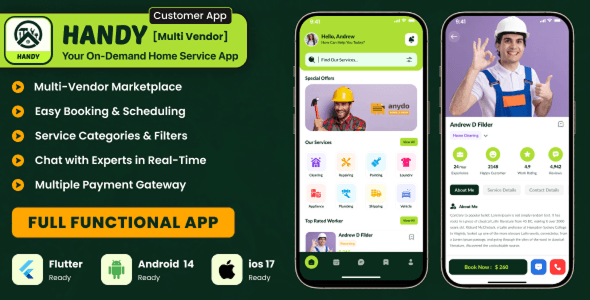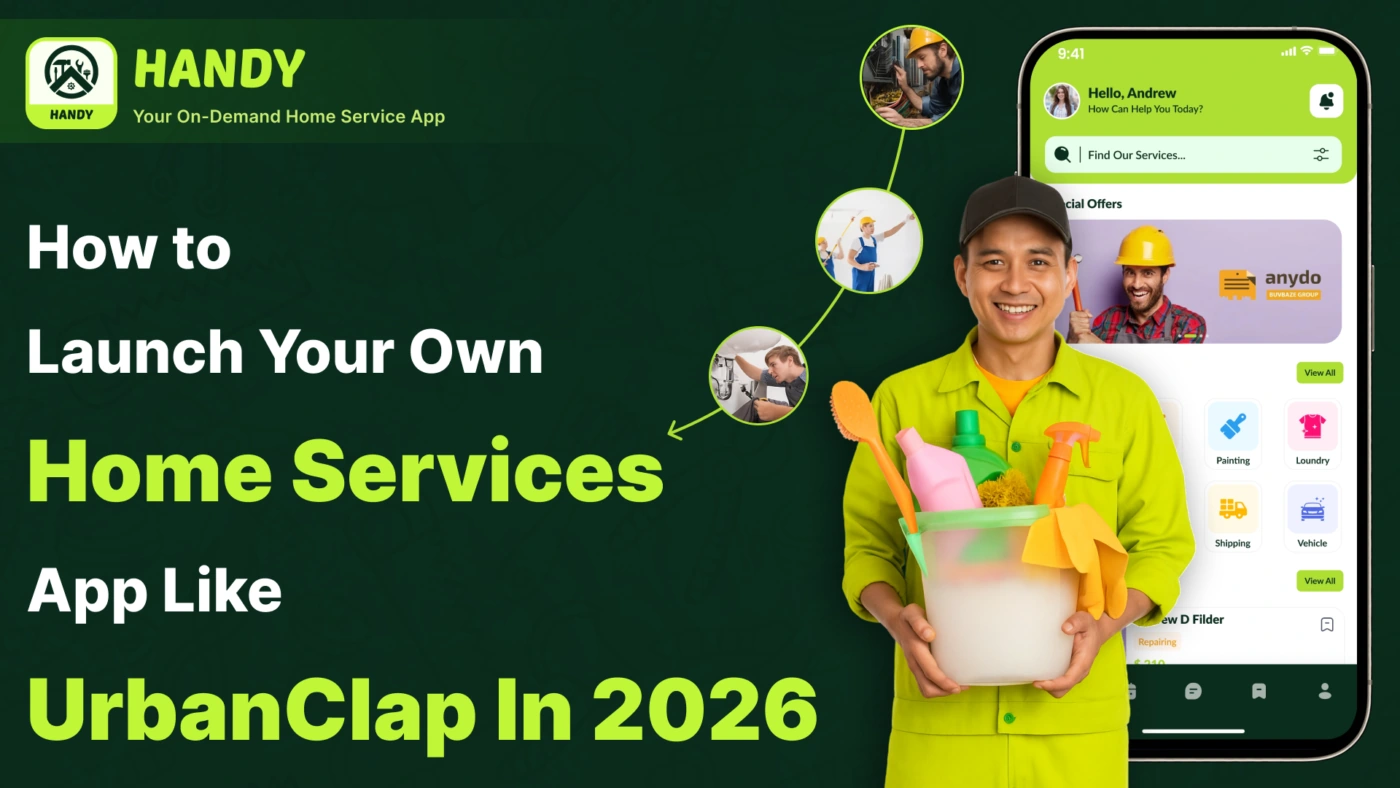
Build a home services app like UrbanClap with service booking, provider management, payments, reviews, and scheduling — plus monetization and launch strategy for 2026.
Key takeaways
- On-demand home services market projected to reach $1,575B by 2030
- Two-sided marketplace with commission and subscription revenue
- Customer, provider, and admin panels are essential
- Launch in one city first, then scale regionally
The home services industry has undergone a massive digital transformation. From cleaning and beauty treatments to plumbing, repairs, and appliance maintenance, people now prefer on-demand home service apps for convenience and reliability.
If you are an entrepreneur, developer, or investor looking to capitalize on this growing trend, building your own UrbanClap clone app in 2026 can be a highly profitable venture. This guide covers the business model, key features, tech stack, cost estimation, and monetization strategy.
Understanding the Market Opportunity
The global on-demand home services market is projected to reach $1,575 billion by 2030, with Asia-Pacific being one of the fastest-growing regions. Rising urbanization, smartphone penetration, and busy lifestyles are fueling demand for platforms like UrbanClap.
Users love the convenience of booking trusted professionals through a home service booking app, while service providers benefit from a steady stream of clients and easy payment systems.
Step 1: Understand the UrbanClap Business Model
The UrbanClap business model connects users with verified professionals for home services. The app works as an aggregator between service seekers and service providers, earning revenue through commissions, service fees, and featured listings.
Key Business Model Insights
- Two-Sided Marketplace — Users book services, professionals accept requests
- Commission-Based Revenue — The platform earns a percentage from each completed booking
- Subscription Options — Service providers can subscribe for premium visibility
- Verified Professionals — Background checks and reviews maintain trust and quality
Step 2: Core Features of a Successful Home Services App
Customer Panel Features
- Easy sign-up/login via email or mobile OTP
- Search and filter by service category, price, or rating
- Real-time service booking and scheduling
- Secure online payment gateway integration
- Ratings, reviews, and order history
- Push notifications for offers and updates
Service Provider Panel Features
- Registration and profile management
- Availability calendar and booking management
- Service request acceptance/rejection
- Secure payment management
- Ratings and feedback from customers
Admin Panel Features
- User and provider management dashboard
- Commission and earnings tracking
- Category and service management
- Analytics and reporting
- Dispute management
Step 3: Estimating the Cost to Develop an UrbanClap Clone
- Basic MVP: $10,000 – $20,000
- Mid-Level App: $25,000 – $40,000
- Advanced Feature-Rich App: $50,000+
An experienced on-demand app development company can help optimize development time and cost with pre-built frameworks and reusable components.
Step 4: Monetization Model for Home Service App
- Commission Model — A percentage fee per completed booking
- Subscription Plans — Monthly or yearly memberships for professionals
- Featured Listings — Paid promotions to boost visibility for providers
- Advertising — In-app banners or sponsored listings
- Service Fees — A small fee added to each customer booking
Step 5: How to Launch Home Services Startup in 2026
Pre-Launch Stage
- Validate your idea with market research
- Identify your target audience (urban professionals, families, corporates)
- Define your unique selling proposition — speed, price, or trust
- Prepare beta testing and feedback collection campaigns
Launch Stage
- Announce through social media, local influencers, and press releases
- Offer limited-time discounts for early users
- Partner with trusted local service providers
Post-Launch Stage
- Collect user feedback and optimize your app
- Invest in SEO and paid ads to increase downloads
- Build long-term loyalty programs
Expert Tips to Create an App Like UrbanClap
- Start small, scale fast — Launch in one city, then expand regionally
- Focus on quality providers — Service reliability builds brand trust
- Use AI and automation — Smart suggestions, chatbots, and automated scheduling
- Leverage analytics — Track customer behavior to improve engagement
- Ensure security and privacy — Safeguard user data and payments
Future of On-Demand Home Services Apps
The demand for home service booking apps will continue to rise with lifestyle changes and urban convenience. Integrations with AI, AR for virtual service previews, and IoT devices will redefine customer experience.
Final Thoughts
Developing your own on-demand home service app in 2026 is about understanding user needs, creating a seamless experience, and building a scalable business model. Whether you are an entrepreneur, developer, or investor, now is the perfect time to launch a home services startup and ride the digital transformation wave.

Written by Incodeslab
Insights on app source code, launches, and growth.